
Where the stone comes from and what "calibrated" means
Most Indian sandstone and much of the limestone sold in the UK is quarried and hand-finished in India, then calibrated to a consistent thickness before shipping. Calibrated slabs are cut on the underside to a set depth, so they bed in evenly on a standard mortar bed. Riven or hand-dressed stone has more natural texture on the surface but a slightly less even back, which a good landscaper allows for in the bedding mix.
Porcelain is manufactured rather than quarried, fired at high temperature, and produced to a far tighter tolerance than any natural stone. That precision is why porcelain joints look razor-straight, and also why porcelain is less forgiving of a base that is even slightly out of level.
Thickness and where each stone is suited
Sandstone and limestone patio slabs typically run 18–22mm thick, which is enough for foot traffic and light garden furniture. Where a natural stone surface needs to take occasional vehicle weight, a thicker, denser format or a different material is the safer call.
Porcelain is usually laid at 20mm for patios; a thicker 20mm+ external-grade porcelain exists for occasional vehicle areas, but it is a different product from the 10mm-format porcelain sold for indoor floors, and mixing the two up is a common and expensive mistake.
Colour movement: what you see in the pack vs what you get outside
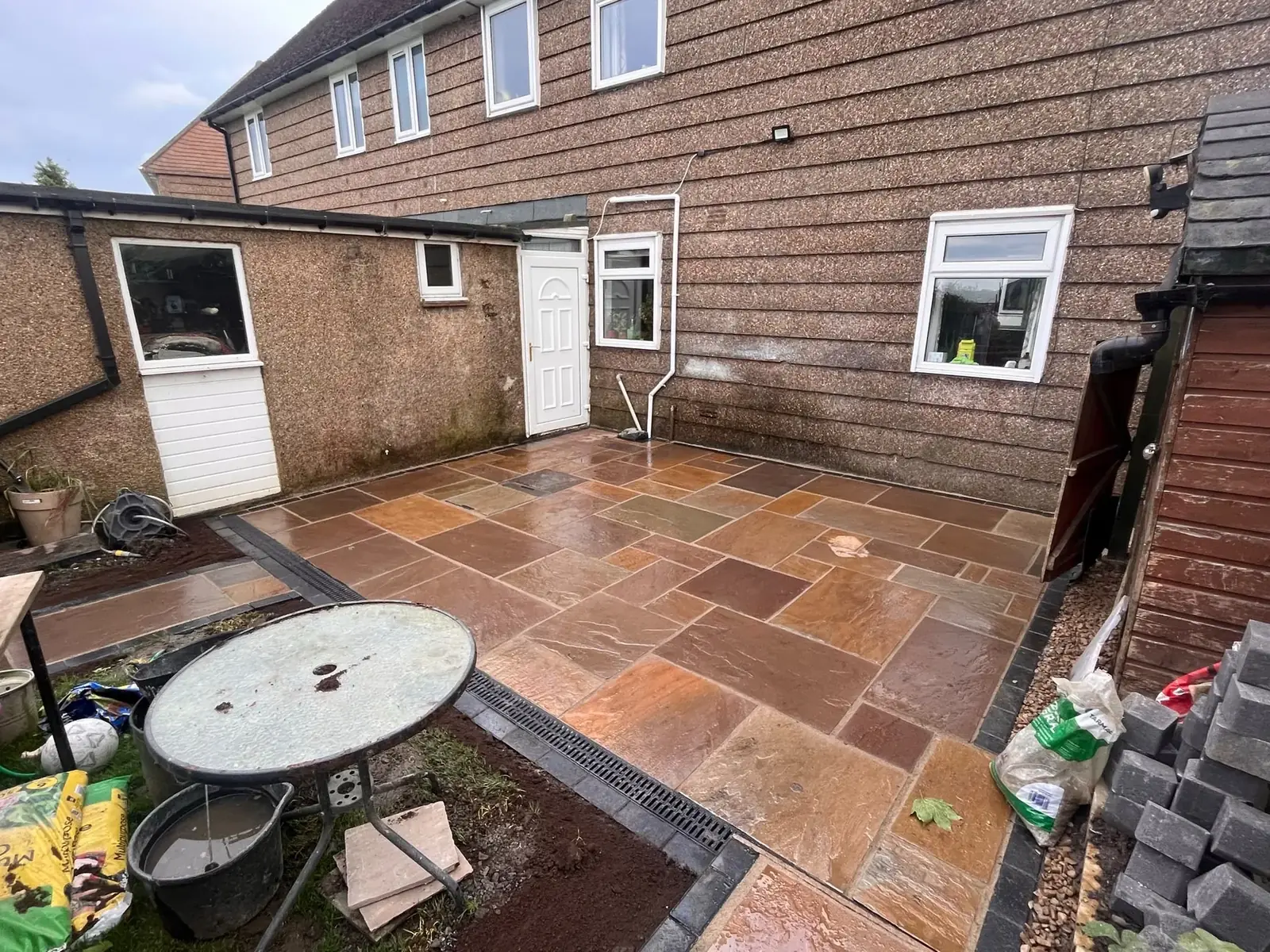
Natural stone is defined by its colour movement — no two Indian sandstone slabs are identical, and a patio laid from several packs will show a genuine spread of buff, grey, lilac or golden tones depending on the batch. Most people like this once it is down; a few find it busier than the showroom sample suggested.
Limestone tends to sit in a tighter grey-blue or fossil-cream palette with less dramatic movement than sandstone. Porcelain is manufactured to match a printed sample almost exactly, batch to batch, which is the main reason people choose it when they want a specific, repeatable look.
- Indian sandstone: widest natural colour variation, warm tones
- Limestone: tighter, cooler colour range, subtle fossil detail
- Porcelain: consistent, matches sample, minimal batch variation
- Granite: hard, dense, usually a narrower grey/silver palette
Sealing, staining and porosity
Sandstone and limestone are porous stones. Left unsealed they will pick up staining from leaf tannins, moss, bird mess and barbecue grease, and they can green over in shaded, damp corners of a garden — which describes plenty of Newcastle back yards. A breathable sealant applied once the stone has fully dried out after laying cuts staining significantly and makes routine cleaning far easier, though it needs reapplying every few years.
Porcelain has very low porosity straight out of the factory, so it resists staining and algae growth without sealing at all. That is one of its genuine practical advantages over natural stone, alongside the flat, consistent surface it leaves for outdoor furniture.
Frost, salt and the North East winter
All four materials are sold as frost-resistant, but how they cope with repeated freeze-thaw and de-icing salt over a Newcastle winter varies. Dense limestone and granite tend to be the most resilient. Sandstone can be prone to surface delamination — thin flaking of the top layer — if water gets in behind a poor seal or the stone was laid on a weak bed that lets it sit wet. Good drainage and a correctly built base matter more to sandstone's winter performance than the sealant does.
Porcelain's low water absorption makes it inherently resistant to frost damage, which is part of why it has become popular for exposed, north-facing patios and areas that hold puddles longer than the rest of the garden.
Slip resistance
Riven, textured sandstone and limestone generally offer good slip resistance when wet, which suits a family garden with steps and a pool surround or hot tub base. Highly polished or very smooth-finish porcelain can be slippery when wet, so it is worth specifying an external, textured, anti-slip-rated porcelain range rather than an indoor-style finish for anywhere it will get rained on — which in Newcastle is everywhere.
What it costs, supplied and laid
Slab price per square metre only tells part of the story — labour, cutting time and bedding method matter as much as the material. As a rough guide for a typical North East garden with reasonable access, Indian sandstone tends to sit at the more economical end of natural stone, limestone a step above it, and porcelain above both once you account for its slower, more exacting laying method and specialist cutting blades.
Access, existing surface removal, falls and drainage move the number just as much as the slab choice does, so treat any per-square-metre figure as a starting point rather than a fixed quote until someone has seen the garden.
Which stone suits which garden
If the house is Victorian or Edwardian brick and you want warmth and character, sandstone is usually the natural fit and the more affordable route in. If you want a cooler, more understated natural stone with tighter colour control, limestone sits between sandstone and porcelain on both look and price. If the garden is modern, low-maintenance is the priority, or the patio sits somewhere shaded and damp, porcelain's low porosity earns its higher price. Granite suits a smaller, high-wear area — steps, a threshold, a hearth-style feature — where its density and narrow palette are an asset rather than a limitation.
Frequently asked questions
Is porcelain worth the extra cost over Indian sandstone?+
If low maintenance, consistent colour and strong frost performance matter most, yes. If you prefer natural variation and a lower spend, sandstone remains the better value choice for most gardens.
Does limestone need sealing like sandstone?+
Yes, it is also porous and benefits from a breathable sealant, though its tighter colour range makes staining slightly less visually obvious than on lighter sandstone.
Can sandstone go on a driveway?+
Standard patio-grade sandstone is not rated for vehicle loading. A thicker, denser format is needed, and in practice most driveways use block paving, tarmac or resin bound instead.
Why has my sandstone patio gone green?+
Algae growth in shaded, damp areas is common on unsealed porous stone. A pressure wash followed by a breathable sealant usually resolves it and slows regrowth.
Is granite a good choice for a whole patio?+
It can be, but its cost and narrower colour range mean it is more often used for steps, edging or a feature area alongside a larger area of sandstone or porcelain.
Not sure which stone suits your garden?
We can bring physical samples of sandstone, limestone and porcelain to a site visit so you can see the colour movement in your own light, then give you a written quote based on the ground conditions.