
Dropped kerbs are a highways matter, not planning
A dropped kerb — lowering the kerb and footway so a vehicle can cross onto a driveway without damaging the pavement — is authorised by your local authority's highways team as a vehicle crossing (or 'vehicle access') application, separate from planning permission.
Each of the four local authorities in this area runs its own vehicle crossing application process, and each will assess things like visibility splays, the presence of street furniture, trees or utility apparatus, and whether the road is a bus route or has other restrictions before agreeing to the work.
Why the footway work must be done by an approved contractor
The footway and kerb are public highway, not part of your property, even though they sit right outside your house. For that reason, the actual lowering of the kerb and reinstatement of the footway has to be carried out by a contractor approved by the relevant council, working to its specification for materials and depths.
This matters because a badly reinstated footway is a trip hazard the council will hold someone accountable for, and unauthorised or non-compliant work can be required to be redone at the homeowner's cost. We can talk through the process with you, but the crossing itself is arranged through the council's approved contractor scheme, not carried out independently.
The 5 square metre rule for front-garden paving
Separately from the kerb itself, paving over a front garden is covered by permitted development rules on impermeable surfacing. If the area being paved is more than 5 square metres, the work only stays within permitted development (i.e. without needing a separate planning application) if the surface is permeable — allowing water to drain through it — or if the water is directed to a lawn, border or a soakaway rather than running off to the public highway.
Below 5 square metres, this restriction doesn't apply, but it's still good practice to manage rainwater sensibly rather than letting it sheet off onto the pavement or road.
- Under 5m² of front paving: no drainage restriction under permitted development
- Over 5m²: needs permeable paving, or run-off directed to a soakaway or planted area
- Dropped kerb: separate application to your local highway authority
- Footway lowering work: must be carried out by an approved contractor, not DIY
What counts as permeable
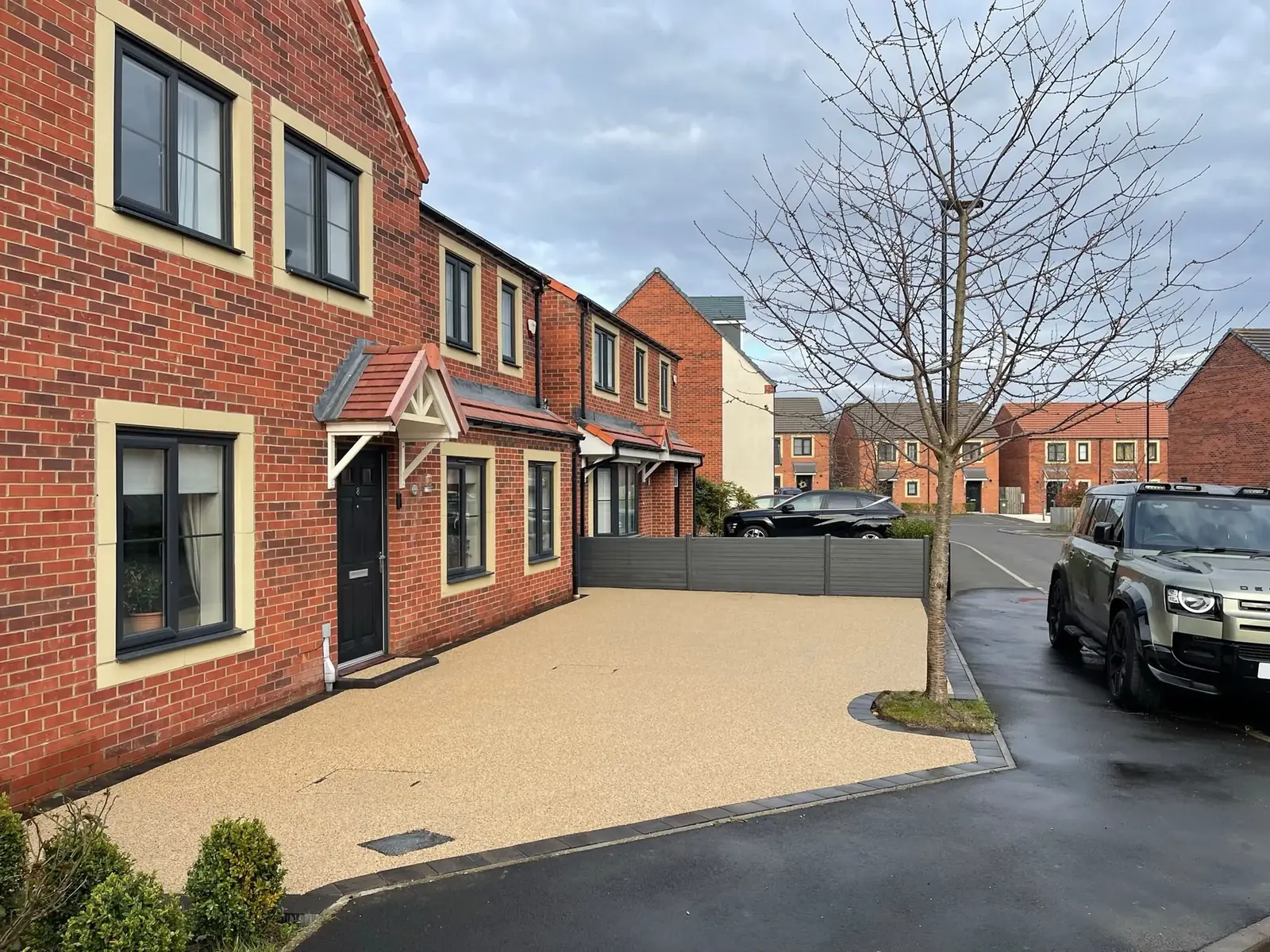
Options that satisfy the permeable requirement include permeable block paving laid with an open-graded sub-base and jointing that lets water pass through, resin-bound surfacing laid on a permeable sub-base, and gravel. A conventional impervious surface like standard tarmac or sealed block paving needs the water directed elsewhere instead.
We design driveways to meet this from the outset where the area is over 5m², so you're not left trying to retrofit drainage after the paving is down.
Where to start
If you're planning a new dropped kerb, the practical first step is contacting the highways team at your relevant council (Newcastle, Gateshead, North Tyneside or Northumberland) to confirm the vehicle crossing process and any site-specific restrictions before committing to a design.
We can advise on the paving side — surface choice, drainage design and layout — while the crossing application itself sits with the council.
Frequently asked questions
Do I need permission to pave my front garden?+
Not always — it depends on area and drainage. Over 5m² of impermeable surfacing generally needs permission unless water is directed to a soakaway or planted area instead.
Can I lower the kerb myself?+
No. The footway is public highway, so the crossing must be installed by a contractor approved by your local council, working to their specification.
Which council do I apply to?+
Whichever authority covers your address — Newcastle City Council, Gateshead Council, North Tyneside Council or Northumberland County Council all run their own vehicle crossing process.
Does permeable block paving avoid the need for planning permission?+
In many cases yes, provided the paving is genuinely permeable and laid correctly — that's the point of the 5m² permitted development rule.
Can WM Driveways handle the whole process for me?+
We design and install the paving and drainage to meet the rules, and can talk you through what the council process involves, though the highway crossing application itself is submitted through the council.
Planning a new driveway with vehicle access?
Call us on 0191 743 3072 or email Wmdrivewaysandpatiosnewcastle@gmail.com and we'll help you plan a compliant, well-drained layout from the start.