Signs a driveway is a good candidate
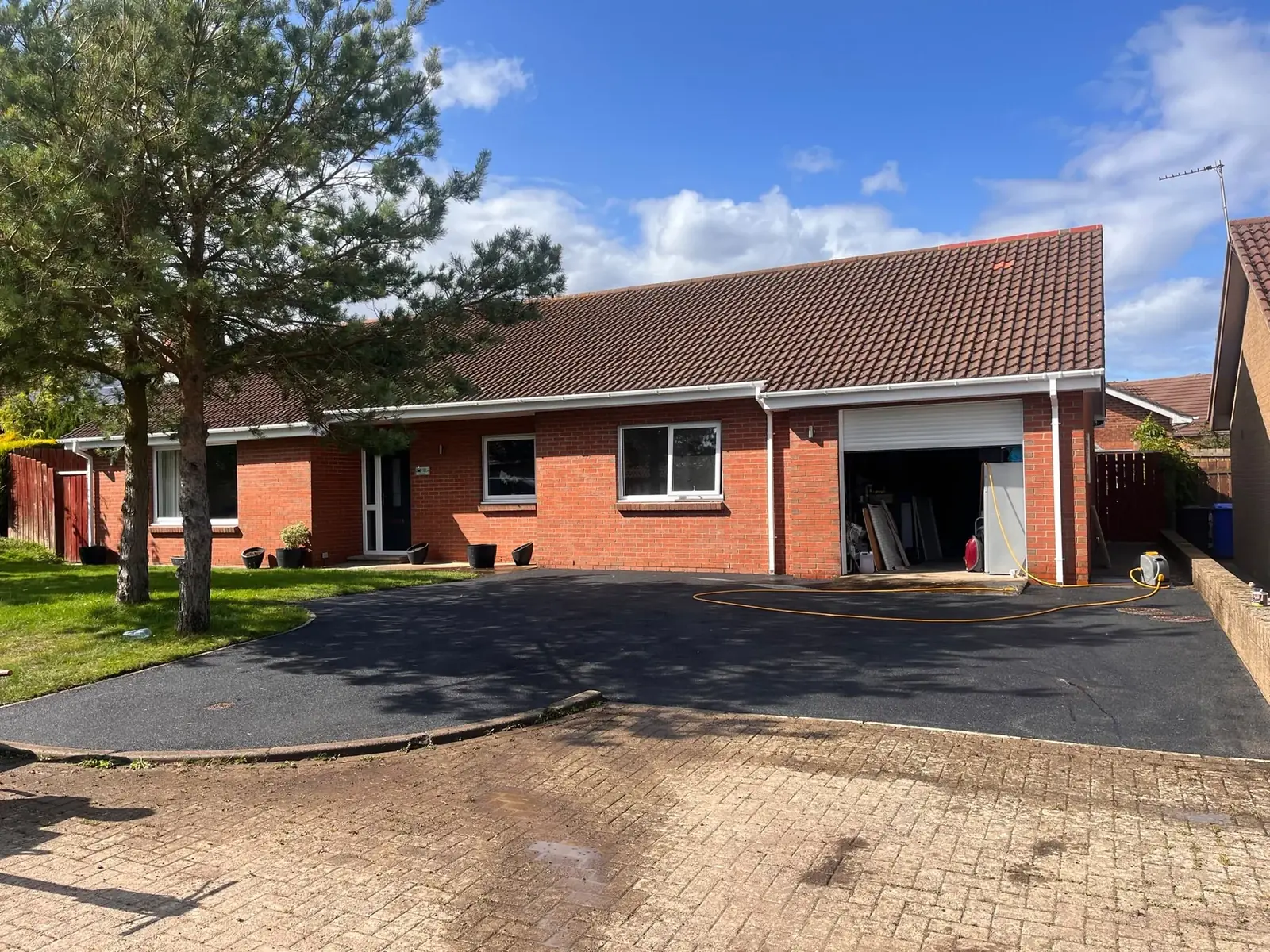
The ideal resurfacing job is a driveway that looks tired but has not moved. The surface may be faded, stained, lightly cracked or fretting, yet when you look along it there are no dips, no rutting along the wheel tracks and no sections rocking underfoot.
- Surface worn, faded or covered in fine cracking
- Levels still even, with no sunken areas
- Edges intact and holding the surface in
- Water drains away rather than sitting in hollows
When resurfacing will not work
If the driveway has sunk, spread or broken up in several places, the base has failed, and anything laid on top will follow it down. Laying a new surface over a moving base is the most common false economy we see; within a winter or two the old faults reflect straight through the new layer.
Height is the other limit. A new layer adds thickness, and at a front door, garage threshold or air brick that extra height can cause water problems or breach the damp-proof course. Sometimes the fix is to plane off part of the old surface first; sometimes it rules resurfacing out altogether.
What the work involves
We start by assessing the existing surface properly, including any areas that do need local repair first. Those spots are cut out and rebuilt so the whole area is uniformly sound before anything goes on top.
The old surface is then cleaned, weeds and moss are removed, and any loose material is taken off. Edges are checked and replaced where they have failed, because a new surface without firm edging will creep outward. Depending on the finish, a bonding coat or primer goes down to tie new to old, and the new surface is laid, compacted or trowelled, and left to cure.
Drainage is looked at during the same visit. If the old driveway shed water towards the house, resurfacing is the chance to correct that with better falls or a channel drain.
Which new finishes suit which old surfaces
Tarmac over sound tarmac is the most common resurfacing job and usually the most straightforward. Resin bound surfacing can be laid over a stable tarmac or concrete base, which is one reason it is a popular upgrade for older driveways; it needs a base that is sound, clean and free of movement, because resin will not hide a failing substrate.
Block paving is different. Blocks cannot be laid as a thin skin over an existing surface, so changing to block paving generally means a replacement rather than a resurface.
Deciding between resurfacing and replacing
The decision comes down to what is under the surface, not how the top looks. On the visit we will show you the areas we have checked, tell you whether the base is fit to carry a new layer, and price whichever options make sense. If resurfacing is not a sensible choice for your driveway, we will say so plainly.
Resurfacing work, like our other installations, is booked with No Deposit Needed.
Frequently asked questions
Is resurfacing the same as a full new driveway?+
No. Resurfacing keeps the existing base and replaces the top layer; a new driveway digs out and rebuilds everything.
Can resin go over my old tarmac?+
Often, if the tarmac is stable, clean and free of movement. We check that on the visit before recommending it.
Will the driveway be higher afterwards?+
Slightly, unless the old surface is planed first. We check thresholds and air bricks so the new level does not cause water problems.
How do I get a price?+
Call 0191 743 3072 or use the quote form and we will arrange a visit.
Find out if your driveway can be resurfaced
We will check the base, tell you honestly whether resurfacing will last, and give you a written price. Call 0191 743 3072.