Appearance and how it ages
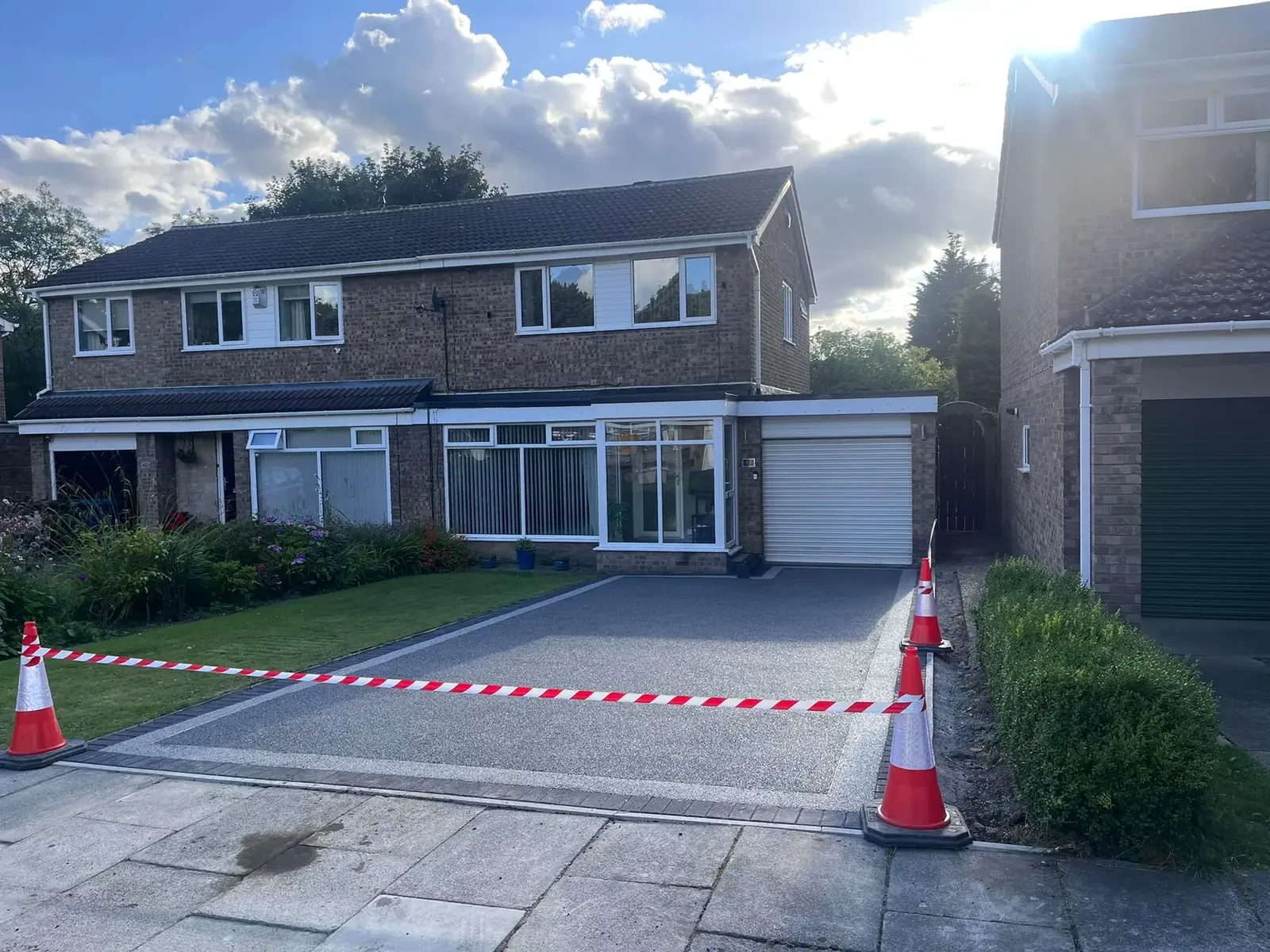
Resin gives you a smooth, seamless, almost continuous surface. It reads as one clean plane, which flatters modern houses and larger frontages. Block paving reads as texture and pattern, which suits period brick and gives you the option of borders, contrasting courses and inlays.
Both age well when laid properly. Resin can pick up marks that need washing rather than lifting; block paving develops a slightly weathered look that many people prefer, though the joints need attention.
Weeds and joints
This is the clearest practical difference. Resin has no joints, so there is nowhere for a weed to root except at the very edges. Block paving has thousands of joints, and windblown seed will eventually find them.
Modern jointing sands and occasional sealing keep block paving weeds manageable, but 'manageable' is not 'absent'. If weeding is your pet hate, that alone often decides it.
Repairs and damage
Block paving wins decisively here. A stained, cracked or oil-damaged area can be lifted and replaced block by block, and if a utility company has to dig, the surface can be reinstated invisibly.
Resin repairs are possible but harder to make invisible, because a patch of fresh resin will not weather identically to the surrounding area for a while. Keeping some of the original blend helps.
- Resin: no joints, no weeds, harder to patch invisibly
- Block paving: jointed, weedable, effortless to repair
- Both: rely entirely on the base underneath
Drainage and cost
Resin bound laid on a permeable build-up drains through the surface, which is a real advantage on properties where there is no obvious place to send surface water. Permeable block systems achieve the same thing with wider joints and a specific sub-base.
On price, block paving typically comes in below resin for an equivalent area. If budget is the deciding factor, block paving usually wins; if a seamless look and zero weeding matter more, resin usually justifies the difference.
Frequently asked questions
Which lasts longer?+
Properly installed, both last a long time. The base build and drainage decide lifespan far more than the choice between these two surfaces.
Which is better for a sloped driveway?+
Resin handles gradients well and stays smooth, but very steep slopes can be slippery when wet, so aggregate choice matters. Block paving gives more inherent grip.
Can I have both?+
Yes, and it looks excellent. A resin main area with a block paving border or apron is one of our most-requested combinations.
Which is easier to keep clean?+
Resin — a jet wash on a wide fan setting and it looks new. Block paving cleans well too but needs joints re-sanding afterwards.
Still undecided?
We will bring samples of both to your site visit and tell you honestly which suits your frontage.