
Look and consistency
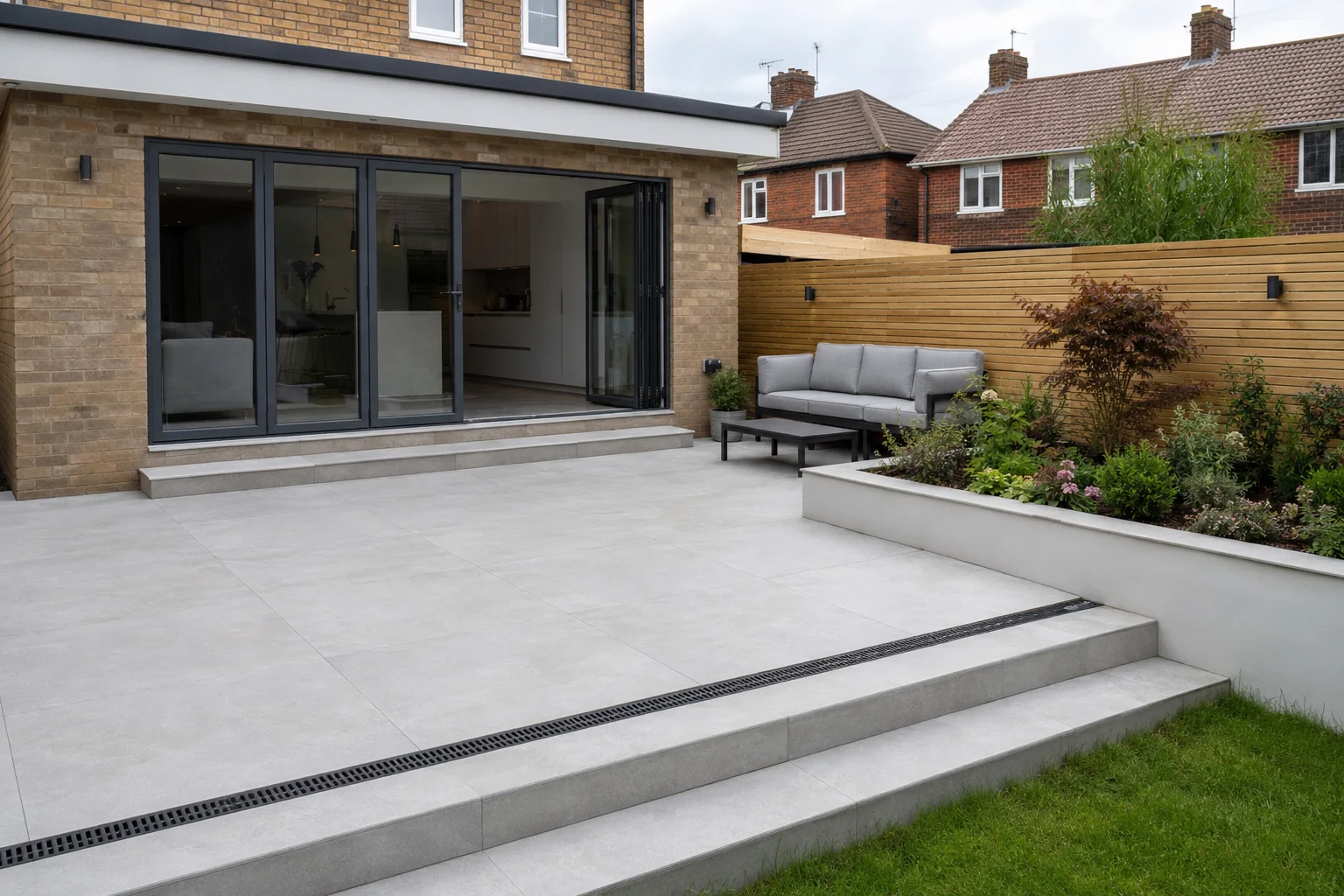
Porcelain is manufactured, so tone and thickness are highly consistent and the joints can be tight and uniform. It pairs naturally with rendered extensions, bifold doors and modern planting.
Indian sandstone is quarried, so every slab differs in tone and the surface carries natural riven texture. On an older brick or stone property that variation is exactly what makes it look right.
Porosity, staining and algae
Porcelain is close to non-porous. Wine, barbecue grease and leaf tannins tend to sit on the surface and wash off. It also resists the green film that shaded North East gardens produce every winter.
Sandstone is porous and will take on some staining and algae, especially in damp shade. It cleans up well and can be sealed, but it needs a bit more attention than porcelain does.
- Porcelain: very low porosity, stain resistant, easy winter clean
- Sandstone: porous, warmer look, benefits from sealing
- Both: need falls away from the house and proper bedding
Slip resistance
Good outdoor porcelain is rated for external use with a textured face and performs well when wet — but not all porcelain is outdoor porcelain, and indoor-grade tiles do not belong on a patio.
Sandstone's riven surface gives natural grip. In heavy shade both can go slippery once algae builds up, which is a cleaning issue rather than a material fault.
Cost and installation
Sandstone is generally the more economical slab and quicker to lay. Porcelain costs more per square metre, needs specialist cutting, and must be laid on a full mortar bed with a slurry primer to bond properly.
Skipping the primer is the single most common porcelain failure we get called out to — slabs work loose because nothing is actually gripping the back of them.
Frequently asked questions
Can porcelain be laid on sand?+
No. Porcelain requires a full mortar bed with a slurry primer on the back of each slab. Laying it on sand or spot dabs leads to rocking and cracked slabs.
Does sandstone need sealing?+
It is optional but worthwhile in shaded gardens. Sealing slows staining and makes seasonal cleaning easier.
Which is better around a hot tub or barbecue?+
Porcelain, mostly — it shrugs off grease and spilt drinks more easily.
Can I match my patio to my driveway?+
Yes. We regularly coordinate a porcelain or sandstone patio with a resin or block paved driveway so the two read as one scheme.
See both in person
We bring samples to site so you can compare tones against your own brickwork before deciding.